Denton County
About
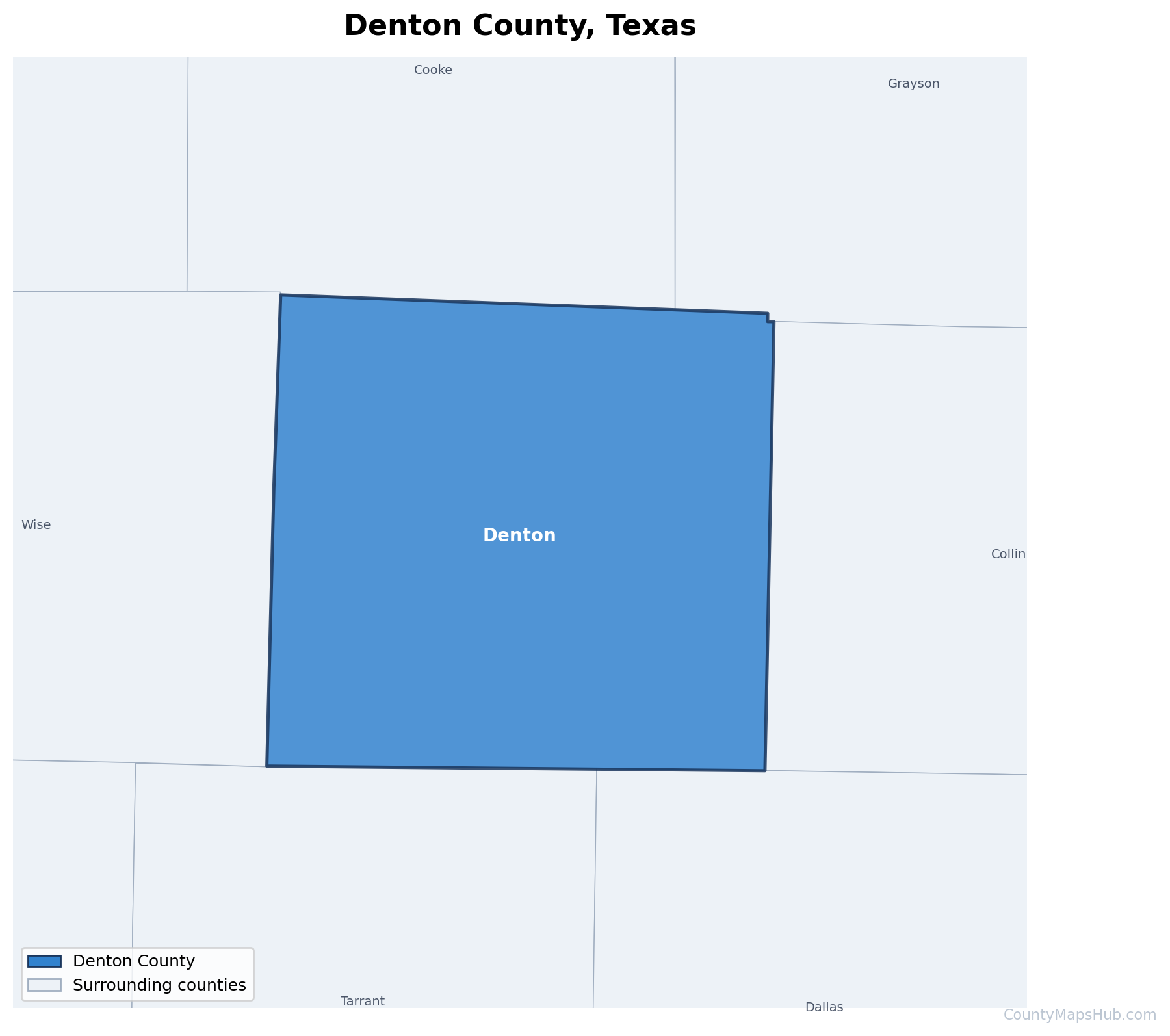
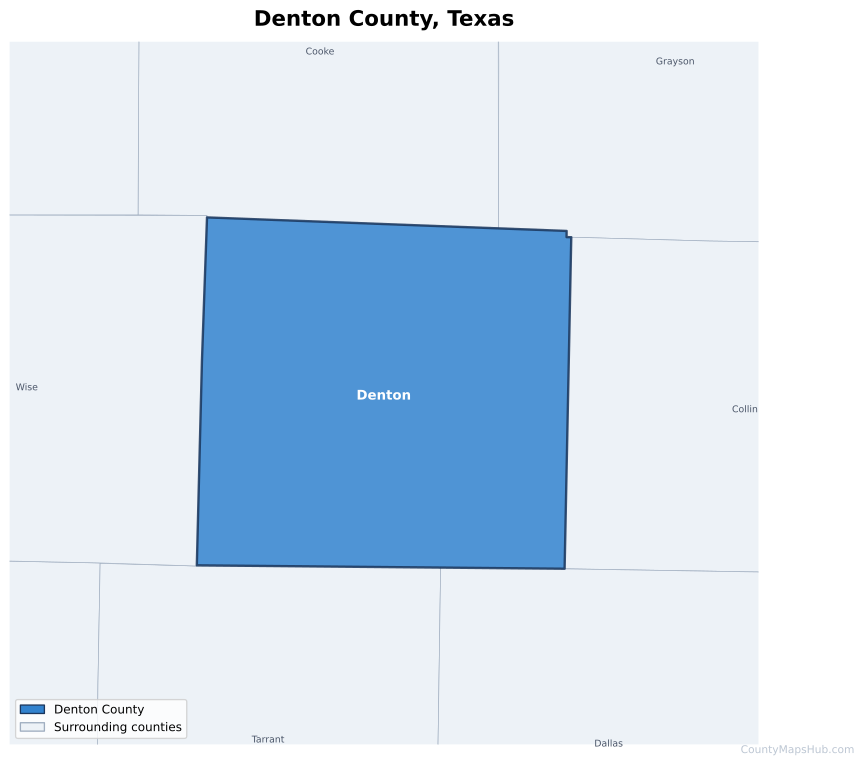
Denton County was established in 1846, marking its place as one of Texas’s historic counties formed in the decades following the state’s annexation to the United States. The county was named after John B. Denton, a pioneer preacher, lawyer, and soldier who played a significant role in early Texas history. During its early years, the region transitioned from frontier territory to established agricultural communities, with settlers drawn to the area’s fertile lands and strategic location in North Texas.
Throughout the late 19th and early 20th centuries, the county developed as a center of agriculture and commerce, with the county seat of Denton serving as the administrative and cultural hub. The arrival of railroads facilitated growth and connectivity to broader markets, transforming the local economy. In recent decades, the county has experienced dramatic transformation from its rural roots into one of the fastest-growing metropolitan counties in Texas, driven by suburban expansion and its proximity to the Dallas-Fort Worth metropolitan area. This growth has brought significant demographic changes while the county has worked to balance development with preservation of its historical heritage.
Population
As of the 2020 census, Denton County recorded a population of 906,422 residents, reflecting remarkable growth that has positioned it among Texas’s most populous counties. This substantial population increase over recent decades demonstrates the county’s appeal as a residential destination within the Dallas-Fort Worth metroplex. The county seat of Denton serves as one of several population centers, accommodating both long-established communities and newcomers attracted by economic opportunities and quality of life. The population density varies considerably across the county’s 887 square miles, with more concentrated urban development in certain areas and rural landscapes preserved in others, creating a diverse residential environment that ranges from suburban neighborhoods to traditional ranch lands.
Climate
Denton County experiences a humid subtropical climate characterized by hot summers and mild to cool winters, typical of the North Texas region. Summer temperatures frequently reach into the 90s Fahrenheit, with occasional stretches of triple-digit heat during peak summer months. Winters are generally moderate, with occasional cold fronts bringing brief periods of freezing temperatures and rare winter precipitation events. The area receives moderate rainfall distributed throughout the year, with spring and fall typically seeing increased precipitation, sometimes including severe thunderstorms.
The humid subtropical classification means residents experience four distinct seasons, though summer heat tends to dominate much of the year. Spring and fall provide pleasant transitional periods with comfortable temperatures ideal for outdoor activities. The region’s weather patterns can be variable, with rapid temperature changes sometimes occurring as frontal systems move through the area. These climatic conditions support a variety of vegetation and have historically influenced agricultural practices and land use throughout the county.
Tourist Attractions
Denton County offers visitors a blend of recreational opportunities and points of interest reflecting its North Texas character. The region features numerous parks and natural areas where visitors can enjoy hiking, fishing, and wildlife observation. Several lakes and reservoirs provide water-based recreation including boating and fishing, attracting both local residents and visitors from surrounding areas. The county’s landscape varies from open prairies to wooded areas, offering scenic drives and opportunities to experience the natural environment of North Texas.
Cultural attractions include local museums that preserve the county’s history and heritage, showcasing artifacts and stories from frontier days through modern development. Historic downtown areas feature preserved architecture and offer shopping, dining, and entertainment options. The county hosts various annual events and festivals celebrating regional culture, agriculture, and community traditions. Educational institutions in the area contribute to a vibrant cultural scene with performances, exhibitions, and public programs. Visitors interested in Texas history will find numerous sites and markers commemorating the county’s role in the state’s development.
Culture
Denton County’s cultural character reflects its evolution from agricultural frontier to suburban metropolitan county. The region maintains connections to traditional Texas and Southern cultural influences while embracing diversity brought by substantial population growth. Community events throughout the year celebrate both historical heritage and contemporary arts, creating a cultural landscape that honors the past while looking toward the future. Local traditions in music, food, and crafts reflect the broader cultural patterns of North Texas, with influences from ranching heritage and Southern foodways.
The presence of educational institutions has enriched the county’s cultural environment, fostering arts scenes, musical performances, and intellectual discourse. Community theaters, art galleries, and music venues provide outlets for creative expression and entertainment. The county’s rapid growth has brought increased cultural diversity, with various communities contributing their traditions and perspectives to the local cultural fabric. Agricultural heritage remains visible in county fairs, rodeos, and livestock shows that continue to draw participation despite urbanization. This blend of traditional and contemporary cultural elements creates a dynamic environment where historical preservation coexists with innovation and growth.