Eastland County
About
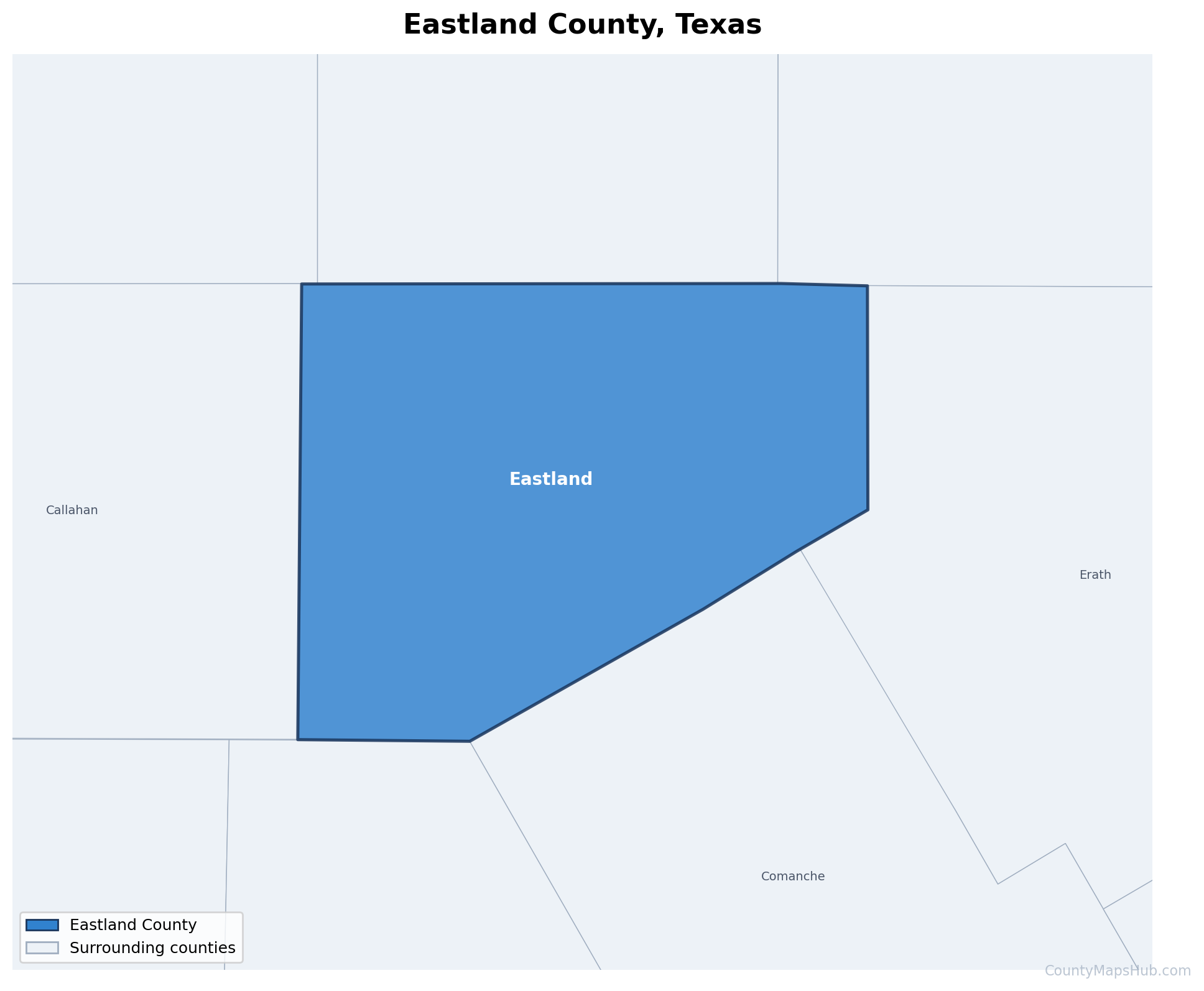
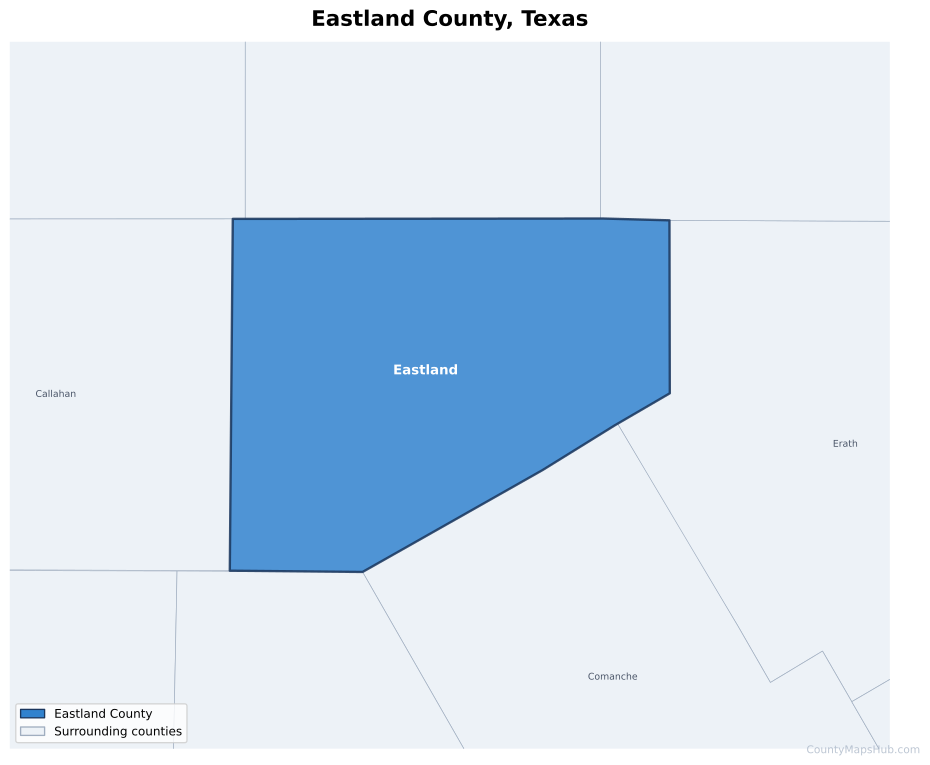
Eastland County was established in 1858 and named after William Mosby Eastland, a prominent figure in early Texas history. The county was organized during a period of westward expansion in Texas, when the state was rapidly developing its infrastructure and county system to accommodate growing settlement patterns. Located in the central-western portion of the state, the county developed as part of the broader expansion of ranching and agricultural communities that characterized this region of Texas during the mid-19th century.
Throughout its history, the county has reflected the economic and social transformations typical of central Texas counties. The late 19th and early 20th centuries brought railroads and commercial development that shaped the county’s growth patterns. Like many Texas counties in this region, Eastland County experienced various economic cycles related to agriculture, ranching, and later oil and gas development that influenced settlement and prosperity. The county seat of Eastland serves as the governmental and administrative center, maintaining the historical continuity of local governance since the county’s organization.
Population
According to the 2020 Census, Eastland County has a population of 17,725 residents spread across its 927 square miles of territory. This population density reflects the rural character typical of central-western Texas counties, where communities are distributed across a landscape that balances agricultural land use with small-town development. The population size places Eastland County among the smaller counties in Texas by total residents, contributing to a close-knit community atmosphere where local institutions and regional traditions remain significant aspects of daily life. The county’s demographic profile represents the blend of long-established families and newer residents attracted to the rural lifestyle and economic opportunities of the region.
Climate
Eastland County experiences a humid subtropical climate characterized by hot summers and mild to cool winters typical of central Texas. Summer temperatures regularly climb into the 90s Fahrenheit, while winter months bring cooler conditions with occasional freezing temperatures, though prolonged cold periods are less common than in more northern regions. Precipitation is distributed throughout the year, with spring and early summer typically receiving the most rainfall, supporting the county’s agricultural activities and natural vegetation.
The climate supports a mixed landscape of grasslands, scattered woodlands, and agricultural uses. Residents and visitors should be prepared for the possibility of severe weather during spring months, as the region can experience thunderstorms and occasionally more significant weather events. The generally favorable climate allows for year-round outdoor activities and contributes to the agricultural productivity that has long been an economic foundation for the county.
Tourist Attractions
Eastland County offers visitors a glimpse into the authentic rural character of central Texas, with opportunities to explore the region’s natural landscapes and small-town atmosphere. The county’s terrain features rolling hills, lakes, and open spaces that provide settings for outdoor recreation including fishing, hunting, hiking, and wildlife observation. Local parks and natural areas showcase the native ecosystems of the region, while the county’s roadways offer scenic drives through quintessential Texas countryside.
Visitors interested in regional history can explore the architectural heritage of county communities, where historic buildings and downtown areas reflect the development patterns of late 19th and early 20th century Texas. The county seat and surrounding towns maintain a slower pace of life that appeals to those seeking to experience traditional small-town Texas culture. Community events throughout the year celebrate local heritage and provide opportunities to engage with residents and learn about the customs and traditions that continue to shape life in this part of the state.
Culture
The cultural identity of Eastland County is deeply rooted in the ranching and agricultural traditions that have defined central Texas for generations. Community values emphasize self-reliance, neighborliness, and respect for the land, reflecting the practical demands of rural life and the historical importance of cooperation among residents. Local gatherings, whether formal community events or informal social occasions, serve as important touchstones for maintaining social bonds and passing down regional customs to newer generations.
The county’s cultural landscape reflects the broader heritage of central Texas, where Western traditions blend with Southern influences to create a distinctive regional character. Local institutions including schools, civic organizations, and faith communities play central roles in maintaining social cohesion and organizing activities that bring residents together. The arts and crafts of the region often draw upon ranching and agricultural themes, while local cuisine reflects both traditional Texas cooking and the influences of various groups that have contributed to the area’s settlement. This cultural continuity provides residents with a strong sense of place and connection to the broader narrative of Texas history.