El Paso County
About
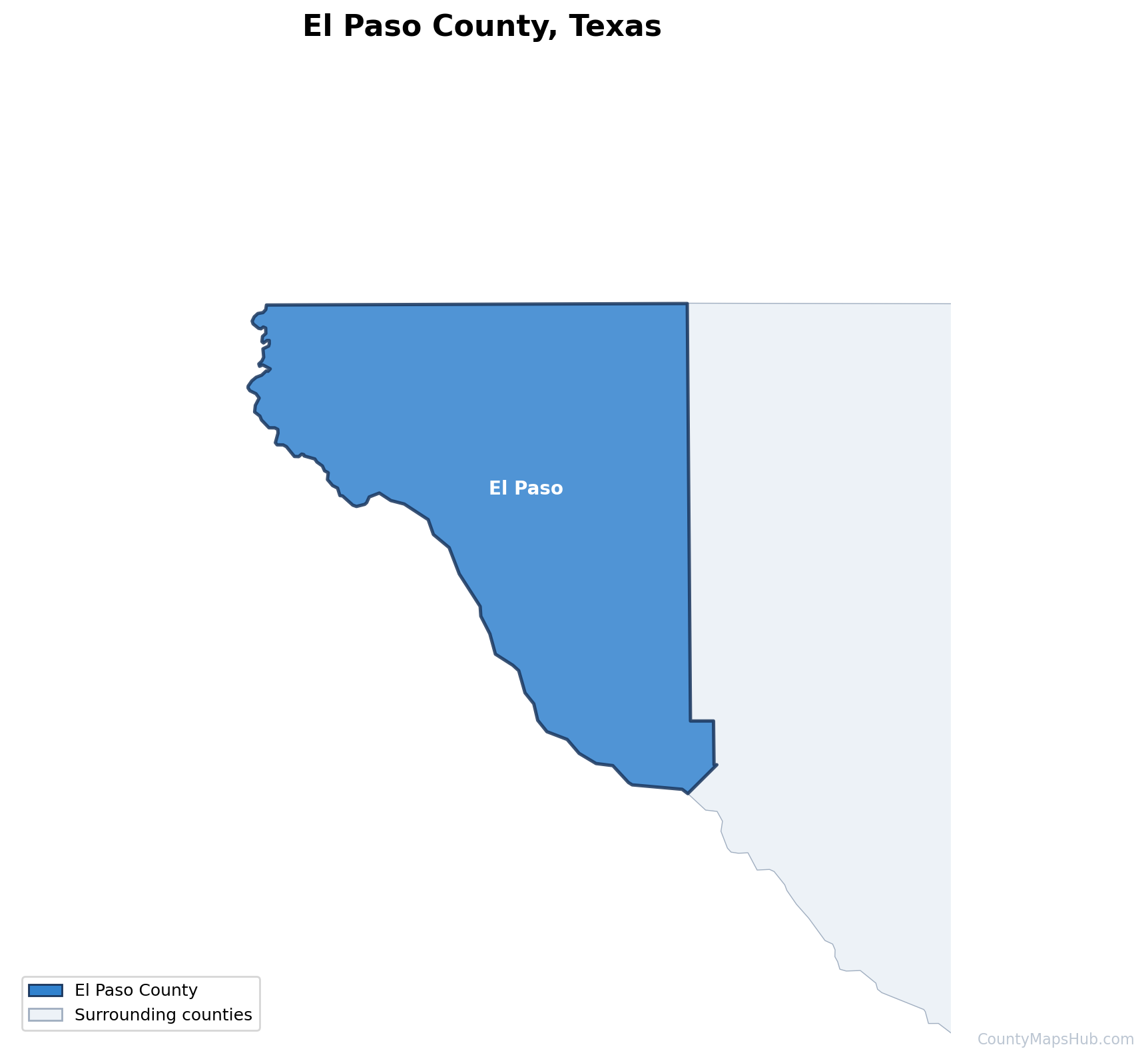
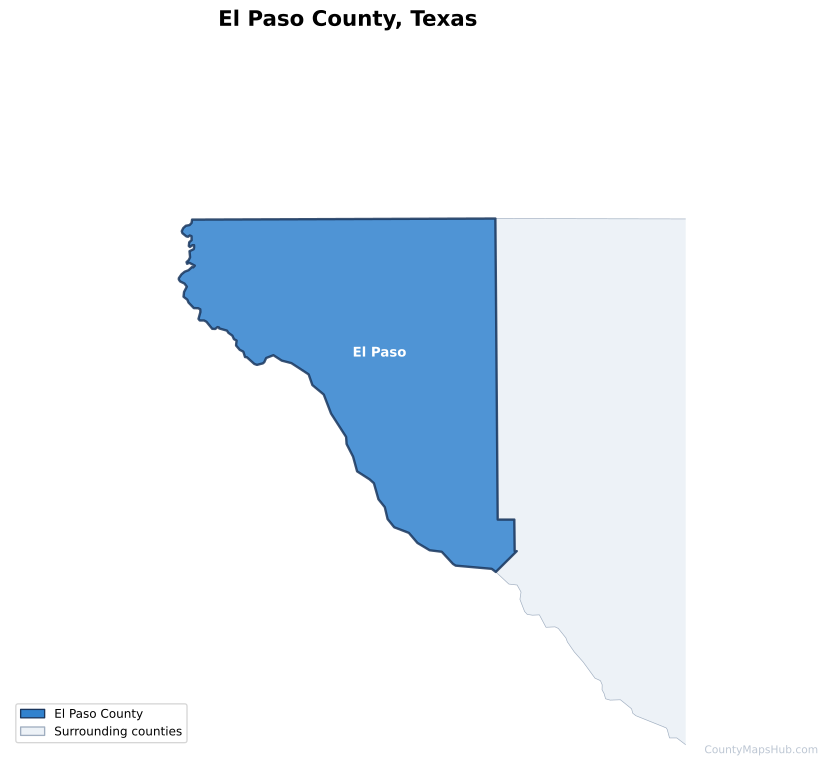
El Paso County was established in 1850, making it one of the early counties organized in the state of Texas. The county takes its name from “The Pass,” referring to the natural mountain pass through the Franklin Mountains that has served as a crucial transportation corridor for centuries. This strategic location along historic trade routes contributed significantly to the region’s development.
The county’s position at the far western edge of Texas placed it at the crossroads of multiple cultures and trade networks. Throughout the nineteenth century, the area served as an important waypoint for travelers, traders, and settlers moving between the interior of Mexico and the American Southwest. The county seat of El Paso developed as the primary urban center, growing around this vital pass and benefiting from its role as a gateway between nations and regions.
Population
According to the 2020 census, El Paso County had a population of 865,657 residents, making it one of the most populous counties in western Texas. The population is concentrated primarily in and around the county seat of El Paso, which serves as the major urban center for the region. Despite covering 1,013 square miles, much of the county’s settlement patterns reflect the challenges and opportunities presented by its arid environment and border location. The population has grown steadily over the decades, driven by the county’s role as a regional economic and cultural hub connecting two nations.
Climate
El Paso County experiences an arid climate characterized by low annual precipitation, abundant sunshine, and significant temperature variations between day and night. The region receives relatively little rainfall throughout the year, with most precipitation occurring during the summer monsoon season. Summers are hot with temperatures frequently exceeding ninety degrees, while winters are generally mild with occasional cold snaps.
The arid conditions and high elevation contribute to low humidity levels and clear skies for much of the year. The county’s desert environment supports vegetation adapted to minimal moisture, and the surrounding mountain ranges create distinctive microclimates in certain areas. Residents and visitors should be prepared for intense sun exposure and the need for adequate hydration, particularly during the warmer months.
Tourist Attractions
El Paso County offers visitors a unique blend of natural desert landscapes and cultural experiences shaped by its border location. The surrounding mountain ranges provide opportunities for hiking, scenic drives, and outdoor recreation, with trails offering panoramic views of the region’s distinctive geography. The area’s dramatic desert terrain attracts those interested in geology, photography, and experiencing the American Southwest’s characteristic landscapes.
Cultural and historical sites throughout the county reflect its long history as a crossroads region. Visitors can explore local museums that document the area’s development, regional art galleries showcasing southwestern artistic traditions, and historic districts preserving architectural heritage. The county’s unique position as a border community creates distinctive cultural offerings not found elsewhere in Texas, including diverse culinary traditions and bilingual cultural institutions that celebrate the region’s multicultural character.
Culture
El Paso County’s culture reflects its position at the intersection of American and Mexican traditions, creating a distinctive bicultural and bilingual community. The region’s cultural identity has been shaped by centuries of cross-border exchange, resulting in unique traditions in music, cuisine, and social customs. Spanish and English are both widely spoken throughout the county, and many residents maintain strong family and cultural connections across the international border.
The county celebrates its heritage through various annual cultural events, festivals, and community gatherings that honor both its southwestern roots and its ongoing role as a bridge between nations. Local cuisine features distinctive regional specialties that blend culinary traditions from both sides of the border. The arts community includes galleries, performance venues, and public art installations that reflect the area’s multicultural character. This cultural richness, combined with the county’s historic significance as a pass through the mountains, continues to define the region’s identity and attract those interested in experiencing authentic border culture.