Falls County
About
Falls County was established in 1850, taking its name from the Falls of the Brazos River, a natural landmark that played a significant role in the region’s early geography and settlement patterns. The county seat of Marlin became the administrative and commercial center of the region during the mid-19th century. Like many Central Texas counties, Falls County’s early history was shaped by agricultural development, particularly cotton farming, which dominated the local economy throughout much of its existence.
The county developed during a period of westward expansion in Texas, with settlers drawn to the fertile lands along the Brazos River valley. Throughout the late 19th and early 20th centuries, the area experienced periods of growth tied to agricultural prosperity and the expansion of transportation networks. The county’s historical development reflects the broader patterns of rural Texas, with communities forming around farming, ranching, and local commerce that sustained the region through various economic cycles.
Population
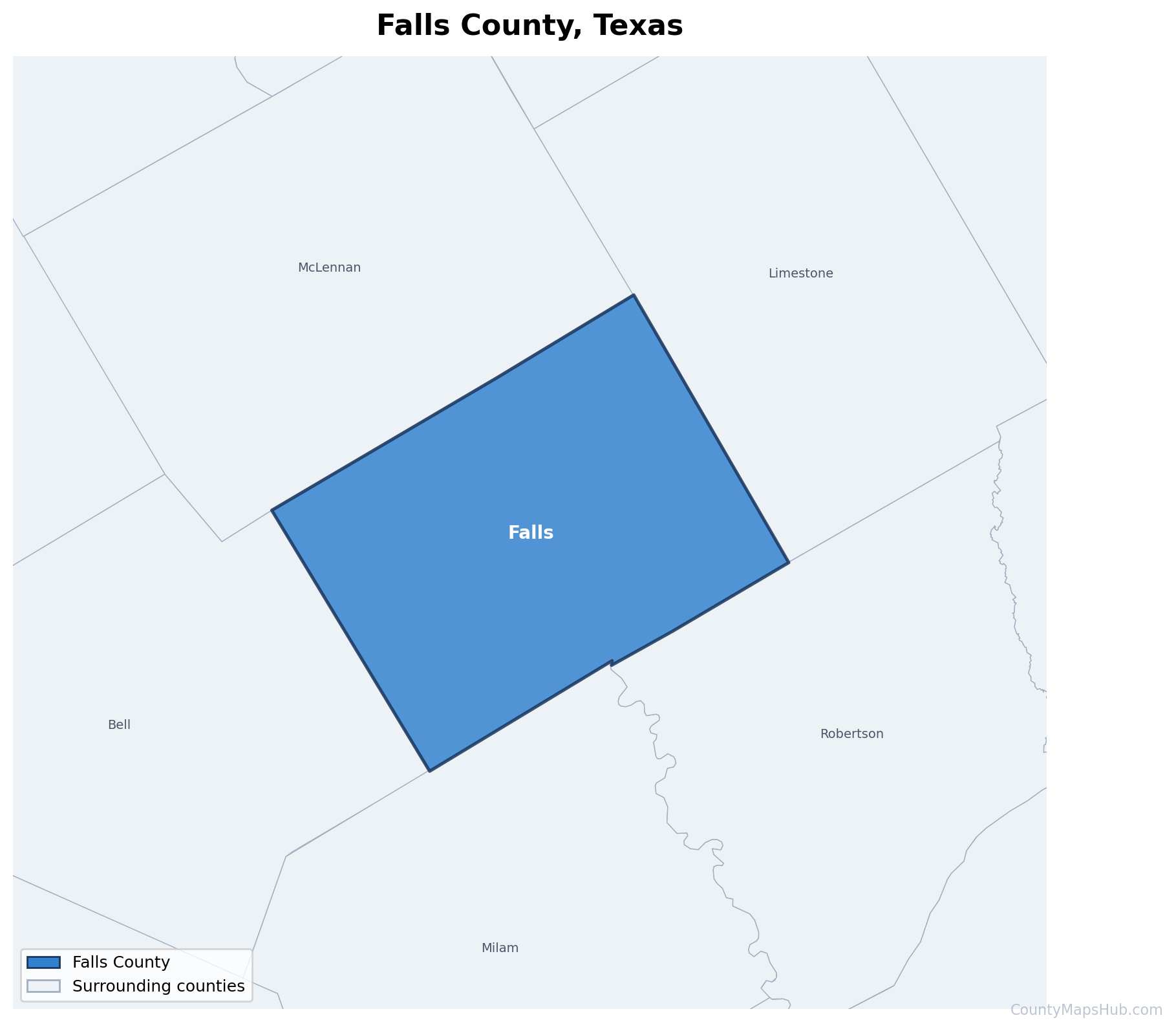
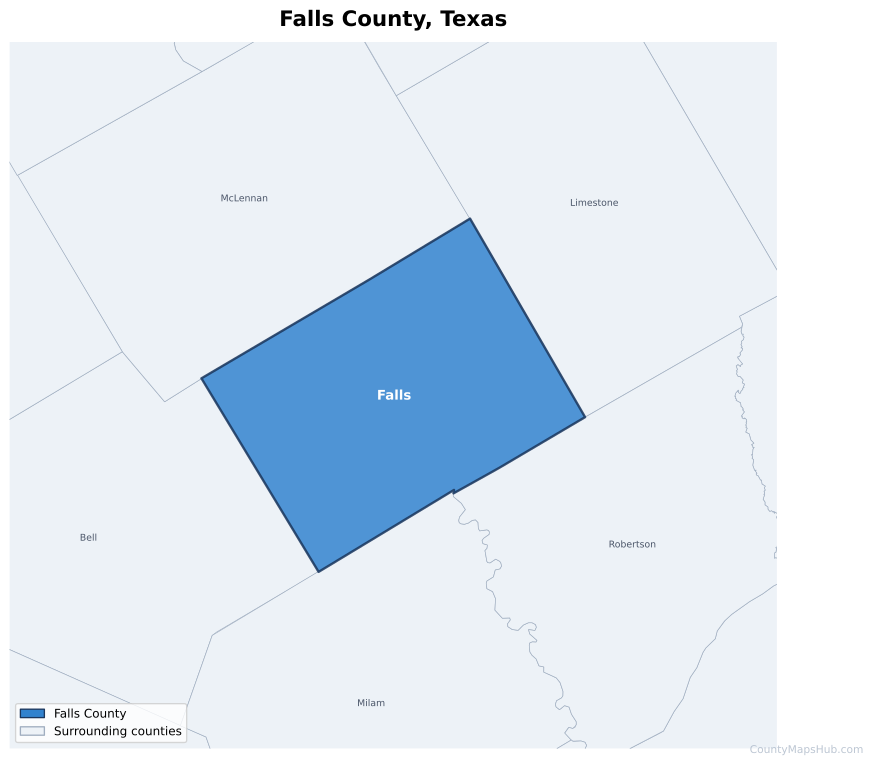
According to the 2020 census, Falls County has a population of 16,968 residents spread across its 769 square miles of Central Texas landscape. This population density reflects the county’s primarily rural character, with residents distributed between the county seat and smaller communities throughout the area. The demographic composition represents a blend of families with deep historical roots in the region and newer residents attracted to the county’s rural lifestyle and agricultural opportunities. The population has remained relatively stable over recent decades, maintaining its character as a close-knit rural community in the heart of Texas.
Climate
Falls County experiences a humid subtropical climate typical of Central Texas, characterized by hot summers and mild winters. Summer temperatures regularly climb into the 90s Fahrenheit, while winter months are generally moderate with occasional cold fronts bringing cooler conditions. The county receives variable rainfall throughout the year, with spring and fall typically seeing the most precipitation. These patterns support the region’s agricultural activities and contribute to the lush vegetation along the Brazos River valley.
The climate allows for a long growing season, which has historically supported the county’s agricultural economy. Residents and visitors should be prepared for the possibility of severe weather during spring months, including thunderstorms and occasional tornadoes, common throughout this region of Texas. The pleasant fall and spring seasons make these times particularly enjoyable for outdoor activities and exploring the county’s natural landscapes.
Tourist Attractions
Falls County offers visitors an opportunity to experience authentic Central Texas rural landscapes and small-town atmosphere. The county’s connection to the Brazos River provides natural scenery and outdoor recreation possibilities, with opportunities for fishing, hiking, and wildlife observation. Local parks and natural areas showcase the region’s native vegetation and provide peaceful settings for those seeking to escape urban environments. The county’s historical architecture and downtown areas reflect its 19th-century heritage and offer glimpses into traditional Texas small-town life.
Visitors interested in regional history can explore local museums and historical markers that document the area’s development from frontier settlement to modern agricultural community. The county’s rural roads provide scenic drives through farmland and ranch country, offering photographers and nature enthusiasts beautiful vistas of the Texas countryside. Seasonal events and community celebrations provide opportunities to experience local culture and hospitality, while nearby larger cities offer additional attractions within easy driving distance for those making Falls County part of a broader Central Texas exploration.
Culture
Falls County embodies the cultural traditions of rural Central Texas, where agricultural heritage remains central to community identity. The social fabric of the county reflects values of self-reliance, neighborliness, and connection to the land that have characterized the region for generations. Local gatherings, whether at community centers, churches, or civic events, serve as important focal points for maintaining social bonds in this rural setting. The county’s cultural life reflects a blend of traditional Texas customs with the evolving influences of modern rural America.
The culinary traditions of Falls County mirror those of Central Texas generally, with barbecue, Tex-Mex cuisine, and home-style Southern cooking representing staples of local dining. Community institutions such as schools, churches, and volunteer organizations play vital roles in preserving cultural continuity and providing services in this rural environment. The county’s cultural landscape is shaped by its agricultural calendar, with planting and harvest seasons influencing the rhythm of community life, and by the enduring importance of high school sports and other activities that bring residents together across generational lines.