Fannin County
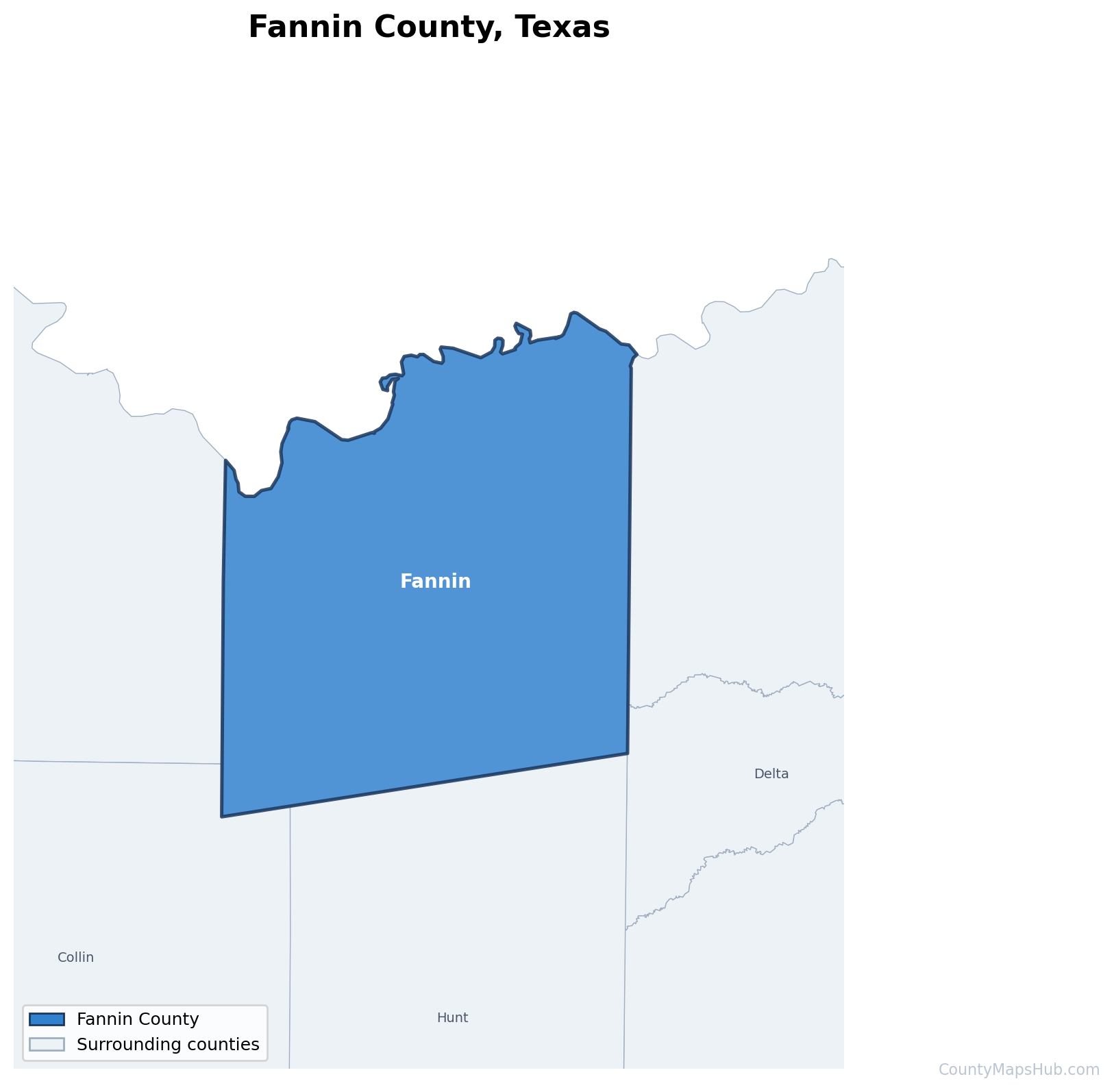
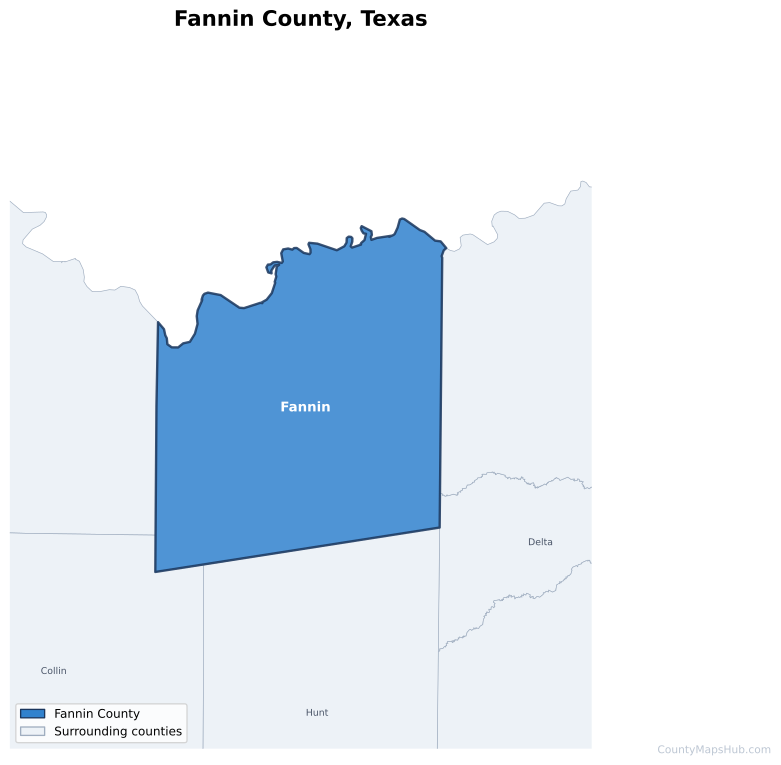
About
Fannin County was established in 1837, making it one of the earlier counties formed during the Republic of Texas era. The county was named after James Walker Fannin, a prominent figure in Texas history who played a significant role during the Texas Revolution. The establishment of the county reflected the westward expansion and settlement patterns of the region during the mid-19th century.
With Bonham serving as the county seat, the area developed around agriculture and trade routes that connected north Texas communities. Throughout the 19th and early 20th centuries, the county’s economy centered on cotton production and livestock raising, which shaped its social and economic development. The arrival of railroads further stimulated growth and connected Fannin County to broader regional markets, fostering the development of towns and commercial activities that continue to influence the area today.
Population
According to the 2020 census, Fannin County has a population of 35,514 residents spread across its 895 square miles. This population density reflects a mix of rural landscapes and small-town communities characteristic of north Texas counties. The population has remained relatively stable over recent decades, maintaining a balance between agricultural heritage and modern residential development. The county’s residents benefit from a close-knit community atmosphere while remaining connected to larger metropolitan areas in the region through highway networks and economic ties.
Climate
Fannin County experiences a humid subtropical climate, characterized by hot summers and mild to cool winters typical of northeast Texas. Summer temperatures regularly reach the 90s Fahrenheit, with high humidity levels that are common in this climate zone. Winters are generally moderate, with occasional cold fronts bringing brief periods of freezing temperatures and rare winter precipitation.
Rainfall is distributed throughout the year, with peak precipitation typically occurring in spring and early summer months. The region occasionally experiences severe weather including thunderstorms, hail, and tornadoes during spring months. The humid subtropical climate supports diverse vegetation and agricultural activities, contributing to the county’s traditional farming economy and natural landscape beauty throughout the changing seasons.
Tourist Attractions
Fannin County offers visitors a glimpse into north Texas heritage through its historic downtown areas and preserved architecture. The county seat of Bonham serves as a focal point for regional history, featuring courthouse square architecture and local museums that showcase the area’s past. Visitors interested in Texas history can explore sites related to early settlement periods and the development of rural Texas communities.
Outdoor enthusiasts will find opportunities for recreation in the county’s rural landscapes, including fishing spots, local parks, and scenic driving routes through agricultural areas. The region’s natural beauty is enhanced by rolling hills, wooded areas, and waterways that provide habitat for wildlife. Seasonal activities and community events throughout the year celebrate the county’s agricultural traditions and small-town character, offering authentic experiences of rural Texas life.
Culture
The cultural fabric of Fannin County reflects its deep agricultural roots and traditional Texas values. The community maintains a strong connection to ranching and farming heritage, which influences local customs, social gatherings, and annual celebrations. Small-town values of neighborliness and community support remain central to daily life, with civic organizations and local churches serving as important social institutions.
The county’s cultural scene includes local artisans, musicians, and historians who preserve and celebrate regional traditions. Community events typically center around agricultural themes, patriotic observances, and seasonal festivities that bring residents together. The area’s cultural identity is shaped by its position in north Texas, blending Southern hospitality with frontier independence, creating a distinct character that honors both past traditions and present-day community life.