Floyd County
About
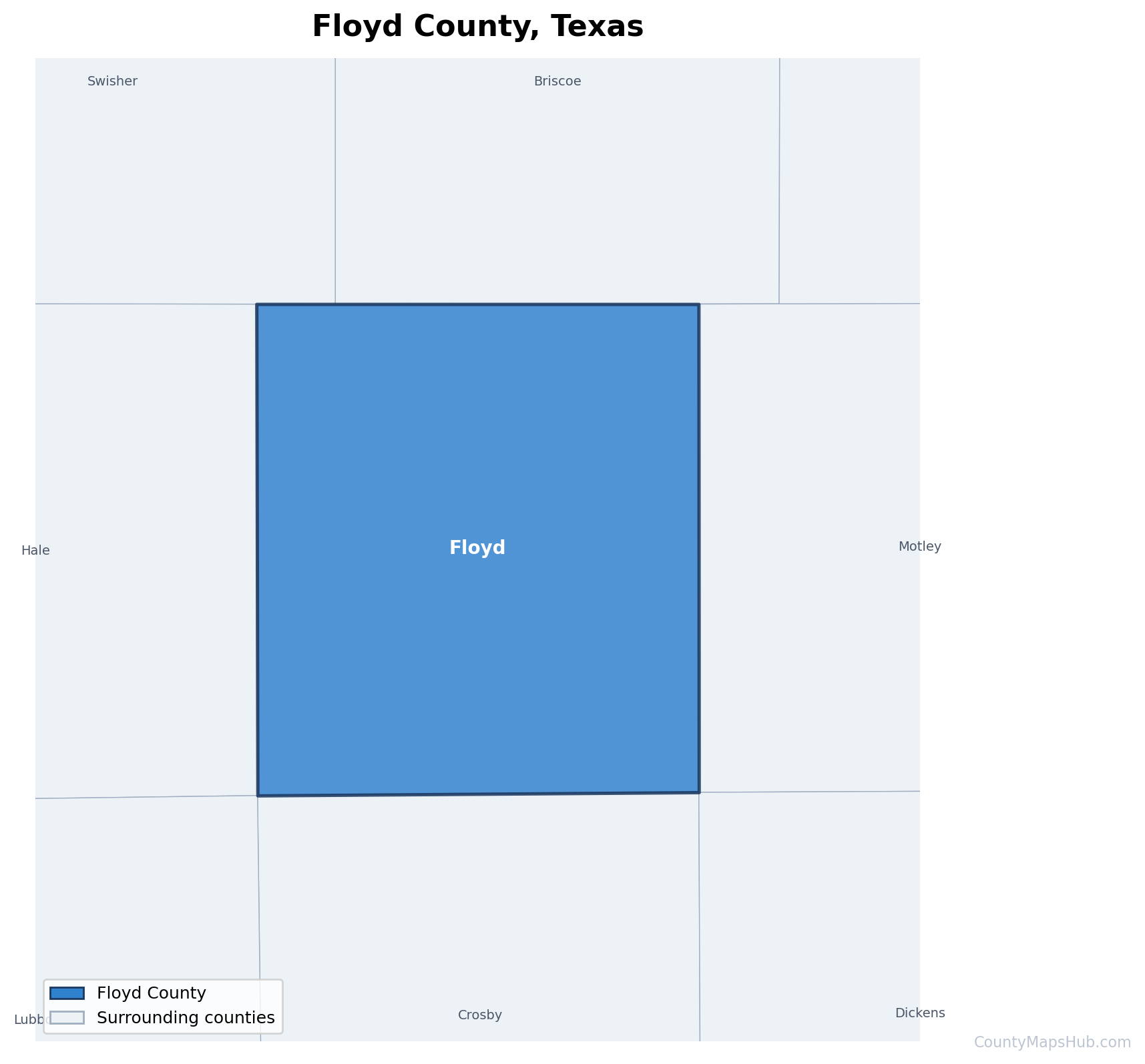
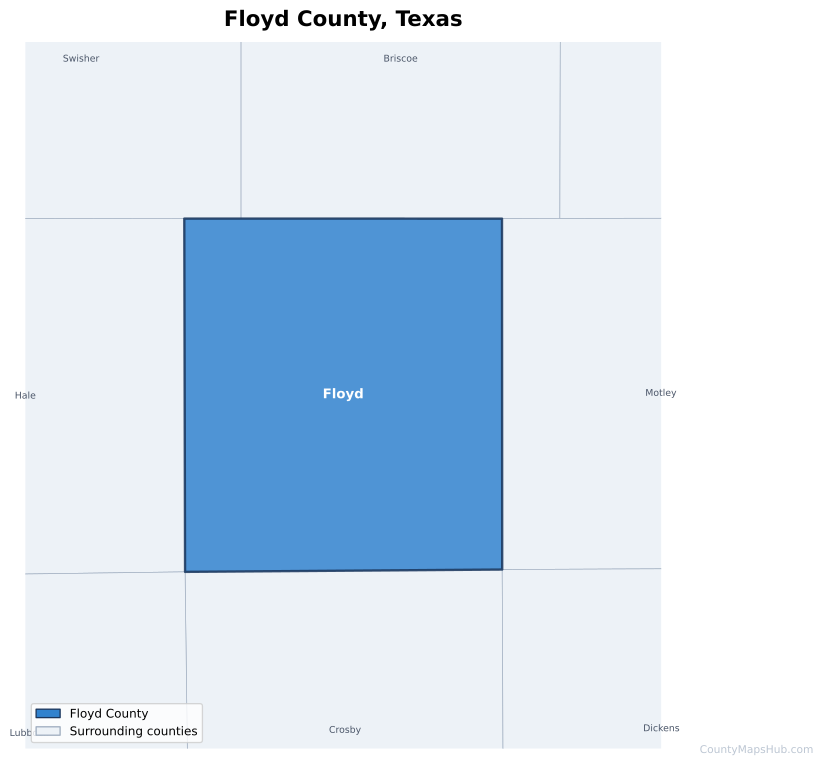
Floyd County was established in 1876 during the post-Civil War expansion of settlement across the Texas High Plains. The county was named after Dolphin Ward Floyd, honoring his contributions to the region during this formative period of Texas development. Like many counties in the Texas Panhandle and South Plains region, Floyd County’s history reflects the transition from open rangeland to organized agricultural communities.
The establishment of Floydada as the county seat provided a central point for government services and commerce as settlers moved into the area. Throughout the late 19th and early 20th centuries, the county developed primarily as an agricultural region, with residents adapting to the challenges and opportunities presented by the High Plains environment. The community structure that formed during these early decades created a foundation for the rural character that continues to define the county today.
Population
As of the 2020 census, Floyd County recorded a population of 5,402 residents spread across its 992 square miles. This population density reflects the rural agricultural nature common to Texas High Plains counties, where wide open spaces and farming operations characterize the landscape. The county seat of Floydada serves as the primary population center, providing essential services, schools, and commerce for residents throughout the county. The population figures indicate a close-knit community where residents often share multi-generational ties to the land and local institutions.
Climate
Floyd County experiences a semi-arid climate characteristic of the Texas High Plains region. This climate zone features relatively low annual precipitation, with moisture coming primarily during spring and early summer months. Temperatures can vary significantly between seasons, with warm to hot summers and cool to cold winters, including occasional winter weather events. The semi-arid conditions require careful water management for agricultural operations and have shaped the types of crops and farming practices historically employed in the region.
The climate’s defining characteristic—limited rainfall—has influenced both the natural vegetation and human activities throughout the county’s history. Wide skies and abundant sunshine are common features, while the lack of significant topographic barriers means weather patterns can move quickly across the plains. Residents and farmers have adapted to these climatic realities through drought-resistant practices and planning that accounts for the variable nature of precipitation in semi-arid environments.
Tourist Attractions
Floyd County offers visitors an authentic experience of rural Texas High Plains life, where agricultural landscapes and small-town character dominate the scenery. The county seat provides a glimpse into the traditional Main Street communities that have anchored the region for generations. Visitors interested in agricultural heritage can observe the working farms and ranches that continue to form the economic backbone of the area, particularly during growing and harvest seasons when the plains come alive with activity.
The region appeals to those seeking wide open spaces and starry night skies unobscured by urban light pollution. Outdoor enthusiasts can explore the characteristic flat to gently rolling terrain of the High Plains, while history buffs may find interest in the architectural remnants and stories of settlement-era development. The county’s location within the broader South Plains region means visitors can experience the authentic rural Texas lifestyle that has persisted through generations of agricultural tradition.
Culture
Floyd County’s cultural identity is deeply rooted in its agricultural heritage and the values of rural Texas communities. The population reflects the self-reliant spirit typical of farming and ranching regions, where neighborly cooperation and strong community bonds have traditionally been essential for survival and prosperity. Local institutions including schools, churches, and civic organizations serve as important gathering points that help maintain social cohesion in this sparsely populated region.
The cultural calendar in rural High Plains counties typically revolves around agricultural rhythms and community celebrations that bring residents together throughout the year. Traditional values emphasizing hard work, family connections, and stewardship of the land remain central to local identity. The blend of Anglo-American and Hispanic cultural influences common throughout West Texas contributes to regional foodways, celebrations, and community traditions that give the area its distinctive character within the broader tapestry of Texas culture.