Hemphill County
About
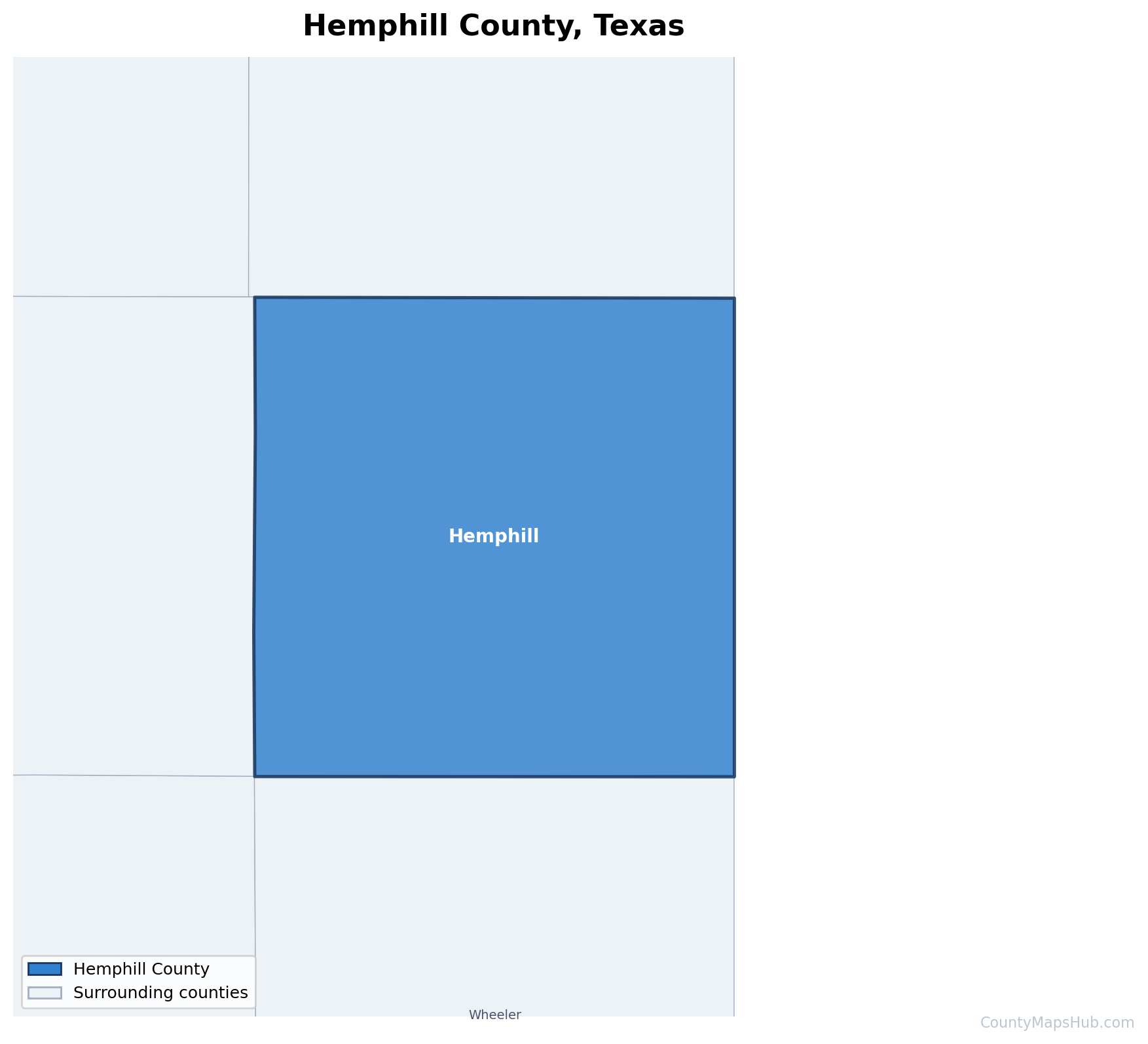
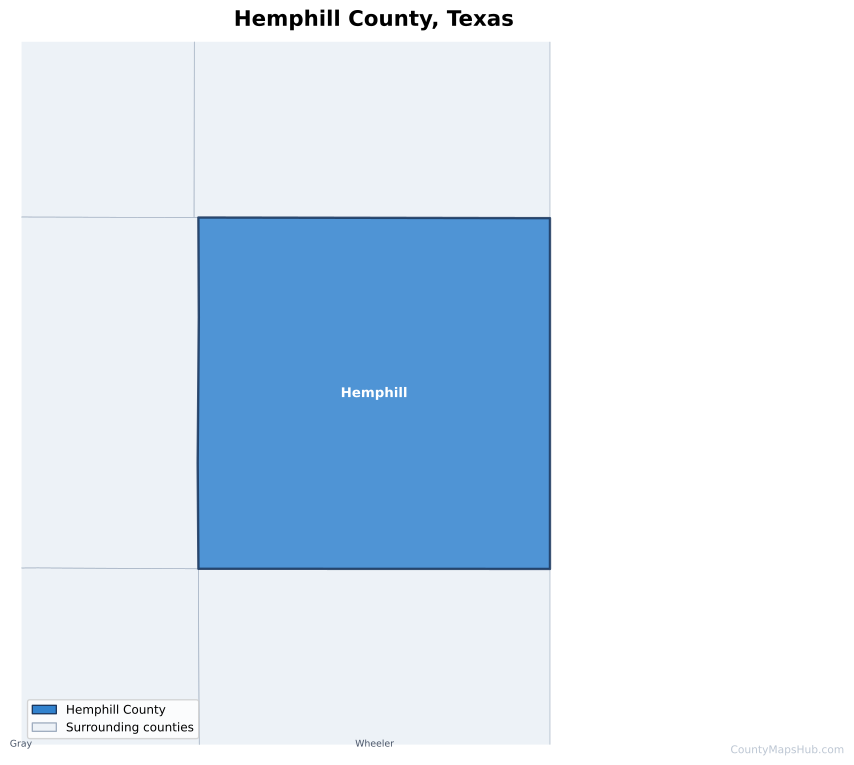
Hemphill County was established in 1876 and named after John Hemphill, a distinguished figure in Texas history. The county’s formation came during the period of westward expansion across the Texas Panhandle, when settlers began establishing communities in this remote region. Canadian serves as the county seat, anchoring local government and community life throughout the county’s development.
The county’s early years were shaped by the challenges of frontier life in the semi-arid plains. Ranching and agriculture became the economic foundation as hardy pioneers adapted to the region’s demanding climate and geography. Over time, the discovery of natural resources and the arrival of transportation networks helped transform the isolated frontier into a more connected part of Texas, though the county has maintained its rural character and strong ties to its agricultural heritage through the decades.
Population
As of 2020, Hemphill County had a population of 3,382 residents spread across its 910 square miles of Texas Panhandle territory. This relatively small population reflects the county’s rural character and the challenges of living in a semi-arid environment where wide-open spaces dominate the landscape. The low population density is typical of many Texas Panhandle counties, where ranching and agriculture require extensive land areas. The population has remained relatively stable over the years, with residents forming tight-knit communities that value their independence and connection to the land.
Climate
Hemphill County experiences a semi-arid climate characteristic of the Texas Panhandle region. This climate pattern brings hot summers with temperatures frequently exceeding 90 degrees Fahrenheit, while winters can be surprisingly cold with occasional snowfall and freezing temperatures. Precipitation is limited throughout the year, with most rainfall occurring during spring and early summer months.
The semi-arid conditions create dramatic temperature swings between day and night, particularly during transitional seasons. Strong winds are common across the open plains, contributing to rapid weather changes. The limited moisture and abundant sunshine create clear skies for much of the year, though severe thunderstorms can develop during warmer months. Residents must adapt to these conditions through careful water management and planning for both extreme heat and occasional winter weather events.
Tourist Attractions
Hemphill County offers visitors an authentic experience of Texas Panhandle life, where wide-open spaces and natural landscapes dominate the scenery. The region’s geography provides opportunities for outdoor enthusiasts to explore the semi-arid plains environment, observe wildlife native to the area, and appreciate the stark beauty of the high plains. The county’s rural roads offer scenic drives through ranch country, where visitors can witness traditional ranching operations and agricultural landscapes that have defined the region for generations.
History enthusiasts will find interest in exploring the legacy of frontier settlement and the development of communities in this challenging environment. The county seat serves as a hub for understanding local heritage and the stories of those who built lives in this remote corner of Texas. Visitors can also enjoy regional recreation activities suited to the open terrain, including hunting, fishing, and photography of the distinctive Panhandle landscape under expansive skies.
Culture
The culture of Hemphill County reflects traditional Texas Panhandle values of self-reliance, community cooperation, and respect for the land. Ranching heritage remains central to local identity, with many families maintaining multi-generational connections to the land and livestock industries. Community events throughout the year bring residents together to celebrate shared traditions and strengthen the social bonds essential to life in rural areas. The agricultural calendar influences the rhythm of daily life, and residents take pride in their ability to thrive in demanding conditions.
Local institutions serve as gathering places where neighbors maintain the close relationships characteristic of small rural communities. Educational and civic organizations play important roles in preserving regional history and passing traditions to younger generations. The culture emphasizes practical skills, hard work, and neighborly assistance during times of need. Religious faith and family values are important to many residents, and the county’s isolation has helped preserve a distinctive way of life that honors both independence and interdependence in equal measure.